A simple (grammatical) reason why “gay marriage” is a threat to REAL marriage

Tony made this comment to a recent post:

I agree Catherine. It seems to me that David has made an argument for marriage but not against gay marriage and has not shown how it is a threat to heterosexual marriage.

Surely the biggest threat (by a country mile) to marriage is divorce and yet the church is not putting comparative pressure on the governments to get rid of divorce.

My year 4 teacher told me that grammar is important. As usual with such matters, you realise this only when you become older.

As the title to the great book on grammar “Eats shoots and leaves” (or, variously, “Eats, shoots, and leaves”) makes clear, grammar is the key to meaning, and meaning is how we attempt to understand the objective world around us.

Until very, very, very recently, the noun “marriage” had only one meaning, even if it existed in various different types (eg. monogamous, polygamous, secular, sacramental, common law, legal, unconsumated, etc. etc.). The various possible adjectives that you could place before the word did not alter the essential meaning of the word: which was a contract between a man and a woman to enter into a life-long relationship of committment to one another as a legal unity. As the adjective “polygamous” suggests, there have been disagreements throughout the centuries on whether a man could make at any one time this contract with more than one woman, but it should be noted that this question did not impinge upon the meaning of the noun marriage as such.

But recently – very, very, very recently – someone tried sticking the word “gay” (meaning “homosexual”, rather than “joyous”) in front of the noun “marriage”. Unlike all the other adjectives suggested above, this adjective does more than qualify the noun, it alters the meaning of the noun itself. In order still to make sense, the noun “marriage” has to be altered. No longer can it mean a contract between a man and woman, now it must be altered to mean “a contract between two persons (gender unspecified)”.

Okay, you say, what’s the problem with that? How does that threaten your marriage?

It “threatens” my “marriage”, because it changes the meaning of the word “marriage”. It changes the nature of the legal relationship of committment into which I entered with my wife. It is not just a case of a different “kind” of marriage – for instance a polygamous marriage or a non-sacramental marriage. Putting the adjective “gay” in front of the noun “marriage” actually requires an essential alteration to the meaning of that noun.

To answer Tony’s objection regarding the threat of divorce, I would say that the high rates of divorce might well be a concern for society and may show that many marriages are in significant difficulty. It may also show that one part of the definition of marriage is a bit wobbly today (the “for life” bit). Nevertheless, viewing it simply from the meaning of the noun “marriage” as given above, I would say the very fact that a legal “divorce” is required to end a marriage contract in fact actually upholds the essential meaning of the noun “marriage” as a “for life” contract.

[Please note: I haven’t used any religious arguments in this post.]

Posted in Uncategorized | 27 Comments

Pope in Lutheran Pulpit

I came across this this afternoon while preparing for tomorrow night’s session at Anima Education, in which we are studying the Christian Traditions (see here: http://www.animaeducation.wordpress.com for more information). We’re up to Lutherans!

This is a video from the Pope’s visit to the Lutheran Church in Rome last year. As I was watching it, I thought, I wonder if the Pope will use the pulpit. And he did! What would Blessed Martin have thought?

(Actually, I think Martin would have thoroughly have approved of this Pope – at least if he had encountered him in his early years around 1517. Instead, he encountered a de Medici…)

Posted in Uncategorized | 6 Comments

New Translation of the Mass in my parish

This morning in my parish, the parish priest introduced the Gloria and Creed – both spoken – from the new translation. This is a little counter-intuitive, as these are (in my parish) both spoken pieces and both quite lengthy, involving the greatest decree of change in any of the pieces. I would have recommended starting with the sung Sanctus, which has only one small change. But part of the difficulty is that we have not yet hit upon which musical settings to use for the new translation, so I guess this was easier.

The new texts were on the overhead screen. The parish priest highlighted the new wording in each in red, which alerted the people to those parts in which they need to be more careful in their recitation. In the main, there were no stumblings, and I didn’t hear any comments afterwards over coffee (there may have been some, but I didn’t hear them).

Ironically, the only place where people DID stumble was on a word that in fact has not been changed, and was in the old ICEL texts, but which by general custom in this parish has been omitted from the Creed on a regular basis. I refer to the word “men” in the phrase “for us men and for our salvation”. It wasn’t highlighted as a “new” word, but it was there in the text where usually it has not been before, and I heard a good majority omit the word even then in their recitation.

Personally, I was wondering what the PP would do with this, and am glad – OH so glad – he didn’t omit it. This has me wondering if he was in fact just waiting for the new texts to reintroduce the full phrase into our usage as required by the Church. He’s only been in the parish a couple of years, and this was a situation that he found when he arrived. So, in charity, I now recognise that there was probably some wisdom in choosing to make sure the word was reinserted along with all the other changes.

I will keep you updated on how the introduction goes. For myself, I am looking forward to Easter. Then we might get a chance to sing the Gloria to its new words.

Posted in Uncategorized | 3 Comments

Prayers for Christchurch

I have never travelled to New Zealand, but my wife has, and she finds the scenes of the devastation of the fair city of Christchurch too hard to bear. One can barely think how deeply sorrowful Christchurchians are at the moment, especially as news reports seem to indicate that up to a third of buildings will be demolished in the rebuilding project. IF there is to be a rebuilding. Some are saying that this latest quake spells the end for the city, that rebuilding will not only be impossible, but also that the risk of continued habitation in that region are too dangerous.

So please pray, pray and pray for the people of Christchurch.

Just as evidence of the destruction, Reuters FaithWorld blog had this “before and after” report recently:

Christchurch’s damaged cathedrals, photos before & after NZ earthquake

In addition to all the death and destruction we’ve been reporting in our news reports (see the latest here), the earthquake on Tuesday in Christchurch, New Zealand has caused significant damage to the city’s two cathedrals, especially to their trademark spires.

Here are pictures by Reuters photographer Simon Baker of the damage to the Cathedral of the Blessed Sacrament (Roman Catholic) and Christchurch Cathedral (Anglican), with pre-quake pictures below them.

Cathedral of the Blessed Sacrament:

CC cathedral 1 (Rubble outside the Roman Catholic Cathedral of Blessed Sacrament in Christchurch February 24, 2011/Simon Baker)

.

CC cathedral 2
(A closer look at the Cathedral of Blessed Sacrament in Christchurch, showing where steeple fell, February 24, 2011/Simon Baker )

Here is the Cathedral of the Blessed Sacrament before the quake:

CC cathedral 1a (Cathedral of the Blessed Sacrament, 5th June 2005/Greg O’Beirne)

More pictures of the destruction on the Catholic blog Transalpine Redemptorists at home.

Christchurch Cathedral:

SPORT ZEALAND/QUAKE (The Anglican Christchurch Cathedral is seen in central Christchurch next to a rugby World Cup poster February 24, 2011/Simon Baker )

Here is Christchurch Cathedral before the quake:

CC cathedral 3a
(Christchurch Cathedral, 5 February 2008/Lover of Romance)
Posted in Uncategorized | Leave a comment

Obama: The New “Tricky Dickie”?

American’s all love to hate Richard Nixon, the President who famously thought himself to be above the law. In the 1977 interview with David Frost he apparently said, when asked about the legality of his actions, “Well, when the president does it, that means that it is not illegal.”

Now, following a personal directive from President Obama, US Attorney General Eric Holder has announced that the Obama administration will no longer defend the 1996 Defense of Marriage Act in cases pending in the 2nd U.S. Circuit Court of Appeals. The details are everywhere on the web, but Fr Zuhlsdorf kindly gives the links (together with commentary by William Oddie and the CNS report of the US Conference of Catholic Bishops’ response).

One wonders if this deliberate intention not to defend the law which has been constitutionally passed by US Congress is not akin to Tricky Dickie’s own belief that “when the president does it…it isn’t illegal.” Does the US President indeed have the power and the right to fail to apply the law of his land? If so, then this would seem indeed to be tyranny acting at the very heart of democracy.

Posted in Uncategorized | 24 Comments

What is the Purpose of Interfaith Dialogue?

I am secretary of the Jewish Christian Muslim Association of Australia (JCMA). We have recently been having a very fruitful discussion on our discussion board about the “purpose of Interfaith Dialogue”. This came at a good time for me, because I had been asked to prepare an article on that very subject for a local Jewish publication. Given that I don’t have a high Jewish readership on this ‘ere blog (I wonder if it is the port – I have to admit it isn’t kosher…), I don’t think I will be stealing their thunder if I publish the submitted article here for you to read. Keep in mind who I was writing for. I may have stated things a little differently or with a different nuance for a Catholic audience. (Incidentally, I am speaking tonight at CulturED – the dinner that follows the 6:30 Adoration in the Cathedral organised by the Catholic Youth Office – on this very topic too).

Anyway, here is the article for what it is worth.

The Purpose of Interreligious Dialogue?

A recent robust discussion on the JCMA email discussion list, begun by a Jewish commentator, revolved around the question: “What is the purpose of interreligious dialogue?” Is the best outcome for which we can hope “peaceful coexistence”?

Certainly harmony within our multicultural and multifaith society is an important outcome in itself, but most of the responses to this question in the discussion suggested that the real aims are much deeper.

It needs to be said from the outset that one of those “deeper” aims is not that we might form some kind of “super-religion”. Genuine interfaith dialogue does not imply relativism or syncretism, a smorgasbord of bits and pieces. Genuine interfaith dialogue does not aim at watering down our faith, but involves fuller commitment. Nor is interfaith dialogue a “debate”. And it should go without saying that there is no place in genuine dialogue for proselytising.

So, what is the “deeper” purpose of interfaith dialogue? What makes this dialogue worthwhile for all religious believers in our society today? In the JCMA discussion, two purposes emerged above all others.

The first is that we might come to “know” each other in a genuine way. A true dialogue involves meeting one another face to face. It may happen formally at special meetings of representatives of different faith traditions, or informally, “over the back fence” with our neighbour who has a different belief to ourselves. But it always takes the other person seriously as a human being created by God and endowed with the equal dignity as ourselves. It means listening in deep humility and openness to the other. It is an invitation to mutual respect, even when we are not in agreement.

The second outcome of genuine interreligious dialogue arises out of the first. Its significance should in no way be under-estimated. I am speaking of true and genuine friendship.

Over the ten years or so that I have been closely involved in interfaith relations in Melbourne, the greatest treasure I have received from this experience is many new and real friends I have made in communities outside my own. Such friendship doesn’t arise out of one meeting alone. It arises over a period of time in which we have continual contact. It is strengthened when we work together on some mutual project or other for the sake of our own communities or for the wider society in Melbourne and Victoria. Many of these friendships have been formed by my involvement in the Jewish Christian Muslim Association, which provides for many such encounters to take place, particularly during our conferences.

A colleague in the work of interfaith dialogue in the Melbourne Catholic Archdiocese recently spoke of these relationships as a “covenantal” friendships. The “covenant” in a friendship such as this involves a commitment to be honest with and trustful of one another, as well as being worthy of that trust in return. This kind of covenant between people of different faiths enables the friendship to grow and becomes a foundation upon which to build further.

Some people, after their first experience of an interfaith meeting, may be disappointed. “It was just coffee and cake – we never addressed the hard questions.” Interfaith dialogue often does begin with coffee and cake, but this is just the first step. One should not expect too much of the first meeting, which may, at this point, appear to be “mere civility”.

But over time, the “knowing” and friendship grows, and an environment of mutual trust and trust-worthiness emerges. Then is the time for a deeper experience of how the other experiences the Divine mystery. Then is the time for the robust discussion and the tackling of the “hard questions”. Then is the time for working out the problems which emerge when our traditions rub together – sometimes (too often) abrasively. But if time and effort is made to allow a true friendship to grow, the hindering factor of fear is removed, and good things can happen.

And here there can be a third “deep” outcome of interfaith dialogue. We are all aware that we live in an increasingly secularised world, where the rights of freedom of belief are challenged, and there is great pressure to “privatise” our faith and “keep it to ourselves”. One of the greatest arguments against allowing a place for religion in the public square is said to be that “they are always fighting one another”, or that religious belief is a cause of conflict rather than a path to peace.

When interfaith dialogue leads to interfaith cooperation, and that cooperation in turn produces something good for the whole of society, it becomes a powerful witness to the vital importance of religious conviction in the public square. Thus our dialogue, our knowing one another, our “covenantal” friendship across boundaries of faith can promote solidarity among all people, action for social justice, defence of moral values and peace and liberty in our world today.

And that is as good a purpose as any that I can think of for pursuing interfaith relations!

Posted in Uncategorized | 6 Comments

A Scarey Assignment: “God for the day…”

I have been invited to go out to Luther College here in Melbourne on Monday and speak to two Year 11 Religious Education classes. It is to be a general exploration of “the BIG questions”. When I was invited, I suggested that it might be more fruitful if the students had a bit of a think about what they wanted to ask, and wrote down some of their questions before hand for me to consider. Their teacher (the one who invited me) asked them to write down the questions they would ask God if they had a chance to do so. The scarey part is that I’m supposed to suggest how God might answer these questions. “You ‘are’ God for the day”, the teacher tells me.

Well, the first thing I think I will tell them when I arrive that I am most certainly and definitely NOT God, and so don’t expect me to be able to respond as if I were. I need to make it clear that anything I say in respect to these questions is a purely human attempt to understand God’s ways. Perhaps the illustration of St Augustine’s dream of the child with the shell at the beach would be appropriate from the beginning.

In any case, I asked the teacher’s permission to use you guys here at the commentary table on this ‘ere blog as my “extended consciousness”, and to ask you to give me a hand with how you would answer any of these questions. The teacher says they deliberately left in some of the “silly ones”. I can see which ones they are, and yet I can also see in this the point that “there is no such thing as a silly question” and even these have their benefits.

Any way, if you down there at the end of the table could pass the port bottle around, we’ll get started. Here are “the BIG Questions” as passed on to me by the teacher from the students. In your replies, please reference the question to which you are responding. Note that “you” in these questions is God. And no, I don’t quite understand what question 8 is about either.

1. If we were created in the image of God, does that mean that we have the potential to be perfect?
2. What will the rest of my life be like? (eg Marriage)
3. How do you choose who has a tough/hard/sad life and who does not?
4. How should I live my life?
5. Why are people born ‘gay’ if this is frowned upon in the Bible?
6. If God is so powerful, can he create something so heavy that he cannot lift it?
7. How do you know what is the right decision?
8. Why do people not realise what they are doing and take their own life?
9. Why can’t the Bulldogs win a premiership?
10. Why do people get sick and die?
11. Why are so many people ‘tools’?
12. Do you answer everyone’s prayers?
13. Is it really a sin to love somebody who is not a Christian, when God says that He is Love?
14. Are our lives planned out for us before we live it?
15. Why can’t we speak to dead people?
16. Why don’t you stop people from doing bad things?
17. Why do you let Satan live?
18. Why is life so complicated?
19. DO you believe in karma?

Posted in Uncategorized | 14 Comments

“Christ dwells in Sinners”?

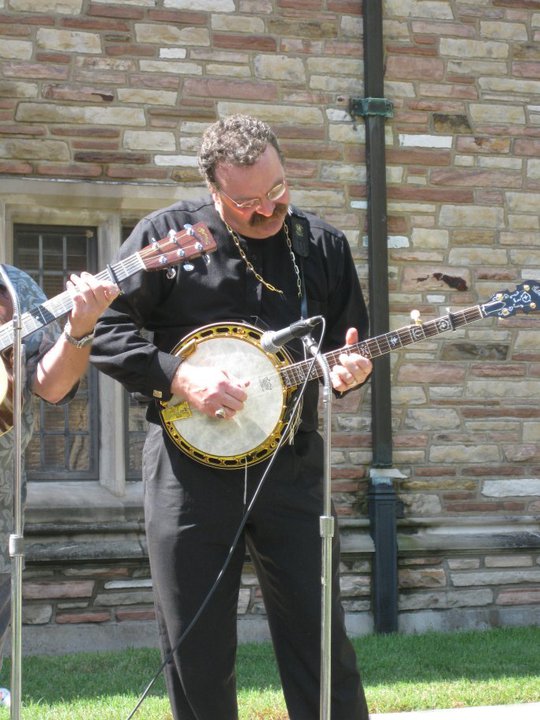
The banjo playing President of the Lutheran Church Missouri Synod is perhaps one of the world’s most knowledgable persons on the writings of the German Lutheran immigrant-to-Australia theologian and pastor, Herman Sasse. On his blog, Mercy Journeys, Pastor Harrison regularly provides his readers with generous snippets from the works of this theologian, often translated from the German by himself.

In a recent post, Pastor Harrison gave us an essay which “first appeared in the Jahrbuch des Martin Luther Bundes, 1946, pp. 38-42. It was written for the 400th anniversary of the Reformer’s death. The essay was republished in Lutherische Blätter, vol. 19, no. 90 (August 1967). Translated by M.H.”

In this essay, which is worth reading to get a flavour of how the great man wrote, Sasse says [with my emphasis]:

“Christ can not enter into living communion with a sinner.” Thus the German edition of St. Thomas Aquinas (vol. 30, p. 528) interprets the statement of Thomas Aquinas, that the man in the condition of mortal sin can not be united with Christ and thus must not receive the Sacrament of the Altar (Summa Theol. III, 79.3). Luther asserted the very opposite: “Christ dwells only with sinners.” For the sinner and for the sinner alone is His table set. There we receive His true body and His true blood “for the forgiveness of sins” and this holds true even if forgiveness has already been received in Absolution. That here Scripture is completely on the side of Luther needs no further demonstration. Every page of the New Testament is indeed testimony of the Christ whose proper office it is “to save sinners”, “to seek and to save the lost”. And the entire saving work of Jesus, from the days when He was in Galilee and, to the amazement and alarm of the Pharisees, ate with tax collectors and sinners; to the moment when he, in contradiction with the principles of every rational morality, promised paradise to the thief on the cross, yes, His entire life on earth, from the cradle to the cross, is one, unique grand demonstration of a wonder beyond all reason: The miracle of divine forgiveness, of the justification of the sinner. “Christ dwells only in sinners.”

This is great writing and great assurance of the Gospel – but there is a problem. It is not fairly comparing Aquinas’ assertion that “the man in mortal sin can not be united with Christ” with Luther’s assertion that “Christ dwells only in sinners”. Because the two statements are seeing the state of “sinfulness” in entirely different ways.

In another discussion entirely, a good Jewish friend wrote:

In a discussion group last year, my rabbi, drawing upon the work of Chief Rabbi Lord Sacks, pointed out that in Greek logic, if A is true, then no-A is not true. If it is the “truth” that Jesus is the Messiah, then anyone like me who does not believe this statement to be true must be either believing a falsehood, or ignorant, or deliberately stubborn.

But this is not so simple a matter. Judaism has a concept of a messiah (or at least a Messianic age), but it differs from the Christian concept. The Jewish Messiah would usher in a world of universal peace and goodwill, and since we don’t have that (yet), the Jewish messiah has not yet arrived. The Christian Messiah, as an individual who died for sins of humanity and can bring about personal salvation for all who believe in Jesus, is a different idea. A and not-A are too-simple categories for dealing with matters of personal faith.

Whatever you think of the example my friend chose for his illustration, his point holds true. In dialogue one partner may assert “A” and the other may assert “not-A”, but in fact “A” – in their vocabulary – might not be the same thing, and hence the ideas might not actually be exclusive.

It is my assertion that when Dr Sasse (speaking of Luther) writes “Christ dwells in sinners”, he did not mean by the word “sinner” the same thing that Aquinas meant when he was speaking of “the man in mortal sin”.

Once again, for the umpteenth time, I must confess my indebtedness to the excellent (and as far as I know unpublished) thesis of Dr Chris Burgwald, “The Sinfulness of the Justified” (he writes about it on his blog here, and I am sure if you email him he will send you a copy). In this work, Burgwald tirelessly examines much that has been said on the matter by recent Lutheran and Catholic theologians. But what emerges in the end is that Catholics and Lutherans means different things when they speak of “sin” and “sinfulness”.

In essence, Catholics teach that “sin in the proper sense” is an act (or the ommission of an act) carried out with the knowing, deliberate and uncoerced intention of breaking God’s commandments. If that action involves “grave matter” – that is, disobedience which involves an objective act which is evil in itself – it is “mortal sin”. (It is “venial” if the matter is not “grave”, or not committed with full intention or knowledge). Concupiscence (ie. the inclination to sin which remains even in the justified in so far as they remain “in the flesh”) is not, in Catholic doctrine, “sin in the proper sense”, although Dr Burgwald’s thesis concludes that it could be regarded as such by analogy much the same as Original Sin is not “sin in the proper sense”. But Lutherans use the term “sin” equally for Original Sin, Actual sin, and Concupiscence, without distinction.

Once you realise this difference in the understanding of what each means when they someone is a sinner, you realise that the statement “Christ dwells in sinners” will be understood quite differently by Catholics and Lutherans.

Catholics believe that if they have committed mortal sin, they have, by definition, decisively acted in such a way as to turn away from God and cut themselves off from relationship with him. Even Lutherans would agree that Christ cannot “dwell” in anyone who has acted in such a way. Yet I would also assert that Lutherans are a little less prone – like some modern Catholics – to acknowledge that it is possible for a Christian to act in such a way. It is possible, and even as a Catholic, I see in myself an astonishing tendancy to sin – both venially and indeed mortally – on a basis so regular as to frighten anyone who truly desires (as I do) to be a disciple of Christ. This tendancy is “concupiscence” – and, according to Catholic teaching, unless and until I actually act upon the tendancy, I am not, technically in this “proper sense” a sinner.

But Lutherans tend to equate (morally) Actual sin, Concupiscence and Original Sin (which they often confuse with Concupiscence). They put them together onto the same level and so sometimes fail to see that the actual sin that Christians sometimes commit can be truly serious enough to break that friendship with Christ that has been established in our hearts through God’s justifying act of reconciliation.

The difference in this understanding of sin can be seen in Sasse’s comments that even an “absolved” Christian approaching the Sacrament of the Altar remains in a state of “sinfulness”. That clearly shows a different understanding, not of absolution (for we are both agreed on the effects of that sacrament), but of what it means to be “a sinner”.

In so far as I remain one who regularly sins, yes, I am a sinner. And that is where it is good to hear the words “Christ dwells in sinners”. It is a word of assurance to me that though I may abandon Christ, he will not abandon me. It assures me that the door is always open, that the Father is waiting for the Prodigal Son to return home, and that he will not turn me away.

But repentance remains the key. Repentance and Absolution, which removes the guilt even of mortal sin and restores the sinner into fellowship with God and the Church, transforms one from being a “sinner” into a “not-sinner”. It restores the original grace of baptism so that once again, Christ may fully dwell in the heart of the believer. The difference between a repentant sinner and a non-repentant sinner is made wonderfully by the case of the theif on the cross, an example to which Dr Sasse points to prove his case. In fact, in terms of Catholic theology, by his repentance, the theif became a “not-sinner” and so the gates of paradise were opened to him. The other theif was also a sinner, yet he did not repent, and that door remained closed.

So it is vitally important in our dialogue, when we seem to have come to an impasse in which one asserts “A” and the other “not-A” to make sure that we are both speaking of the same thing when we say “A”.

Posted in Uncategorized | 2 Comments

Come on in – it’s awful! (And beautiful!)

HT to Marco who sent me this link: http://tina-beattie.blogspot.com/2011/01/update-radio-4-and-ordinariate.html. There’s something in what she says, although I would like to think that the Ordinariates are not going to be “on the edge” of the Catholic Church. In fact, as full members of the Episcopal Conferences of the Latin-rite Catholic Church, they are rather more at the centre than some of our Eastern Rite brethren and sistern. They will add, not subtract, from the diversity which is the communion of churches that makes up the Catholic Church.

The phrase “come on in, it’s awful” comes from the title of the delightful book by the eccentric Joanna Bogle. Those of us who have “come on in” know exactly what the title means! We didn’t join the Catholic Church because (for eg.) She had wonderful and beatiful liturgies – although She is indeed capable of this when She tries – but for the sake of communion with the universal Church and the Bishop of Rome the Successor of Peter.

And just to show how varied the new comers may be, check this out.

And on top of all that, I think it is just wonderful that those planning to be part of the new Australian Anglican Ordinariate understand that the name of the game is Evangelisation!

Posted in Uncategorized | 24 Comments

Church’s revamp of Mass sparks rebellion of priests

With (minor) apologies to Barney Zwartz and Leesha McKenny.

Church’s revamp of Mass sparks rebellion by priests
February 19, 1970

THE Catholic Church faces open defiance over the introduction of its new Mass translation this year, with a dozen priests indicating they will refuse to use it and hundreds of others ”steaming” over a lack of consultation.

The Mass has become the latest battleground in the culture wars between progressive Catholics and traditionalists suspicious of the reforms of the recently concluded Vatican Council, of which probably the most important was changing the Mass from Latin to the local language of worshippers.

The new version is not a literal translation of the 400-year-old Latin text. There are significant changes to what both the priest and the faithful say in the liturgy. The translation has been heavily influenced by a Vatican advisory committee headed by Archbishop Annibale Bugnini.

Supporters say the new text is more contemporary and easy to understand, while critics say it is artificial, bad English and not faithful to the original latin text.

Rather than introducing the changes gradually, itt will be introduced all in one hit in Australia on a morning Sunday soon in local parishes and it will be compulsory to celebrate every Mass in English according to the new rite from now on. No indult will be provided for those who want to continue to say Mass the old way.

The National Council of Priests chairman said hundreds of his 1600 members were ”steamed up” at the Vatican’s lack of consultation, and were concerned that the break in a tradition more than 1800 years old would alienate Mass-goers, most of whom had used only the Mass in Latin all their lives.

He said most priests would not decide how to respond until they saw the changes, but at least a dozen had told him, ‘I’m not changing.”

Posted in Uncategorized | 64 Comments