And she went away rejoicing!

When Benedict XVI was elected, I marvelled that he “wrote all his own stuff”. Pope Francis too, only he doesn’t seem to both to write it down: from what I have seen, he speaks “ex corde” – straight from the heart. If he has a text, he doesn’t just wander from it – he seems at times to abandon it all together.

He has the same tendency to wander – or rather abandon altogether – his minders’ plans for where he will go and what he will do. Here we have a snapshot of the EWTN coverage of the Pope greeting people after his mass at St Anne’s yesterday. Notice the sheer joy on the face of the nun! Notice too the sheer determination of the minder to drag her away from him. If I were her, I would have been bloody annoyed at being man-handled like that, torn away from my pastor. But she “went away rejoicing” (Acts 8:39).

she went away rejoicing

Mind you, Matthew 19:13 also came to mind.

Posted in Uncategorized | 4 Comments

Ablative Gerundives and the Pope’s Motto

There was some question at work today about the meaning of Pope Francis’ motto “miserando atque eligando” – which is the same he has used on his crest since first becoming a bishop.

Okay. So first I identified these latin verbs as ablative gerundives. Then I got stuck. I know what a gerundive is, but what does it mean when it is in the ablative? At this point I did the sensible thing. I threw away the dictionaries and grammars and when here: “What does the Pope’s motto really say?”

Thanks, Fr. Z. Just goes to prove that it is not necessary to know everything, just to know people who do.

Posted in Uncategorized | 11 Comments

Pope Francis: Theologian of the Cross!

This time fresh off the press/internet this morning.

Pope Francis seems to have quite a way with words – and I note that he was preaching extempore. But what a message! This is powerful stuff. And I do hope that Pastor Mark is listening, because that sounds to me like an authentic theology of the cross that the Holy Father was preaching.

There is a full text in English translation at Zenit.

[I]f we do not confess Jesus Christ, the thing does not work. We will become a welfare NGO but not the Church, the Bride of Christ. …When we do not confess Jesus Christ, I am reminded of the words of Léon Bloy: “Whoever does not pray to the Lord, prays to the devil.” When we do not confess Jesus Christ, we confess the worldliness of the devil, the worldliness of the demon.

…The same Peter who had confessed Jesus Christ said to him: You are the Christ, the Son of the living God. I will follow you, but let’s not talk about the cross. This is not a part of it. I will follow you in other directions, but not to the cross. When we journey without the cross, when we build without the cross and when we confess a Christ without the cross, we are not disciples of the Lord: we are worldly [lit. mundane], we are bishops, priests, cardinals, popes, but not disciples of the Lord.

I would like for us all, after these days of grace, to have courage, precisely the courage, to walk in the Lord’s presence, with the cross of the Lord; to build the Church upon the blood of the Lord, which was poured out on the cross; and to confess the only glory there is: Christ crucified. And in this way the Church will go forward.

It is my wish for all of us that the Holy Spirit – through the prayer of Our Lady, our Mother – bestow upon us the grace of journeying, building, confessing Jesus Christ crucified. Amen.

Of course, Pastor Mark will not like the fact that the Holy Father spoke of the prayer of Our Lady. But there it is. Evangelical Catholicism. Get used to it.

We have heard a lot about Pope Francis’ simplicity of life, but this short homily shows he has a “simplicity of preaching”, which gets right to the core of the Christian kerygma: “Jesus Christ, and him crucified” (1 Cor 2:2).

Posted in Uncategorized | 34 Comments

Oooh, I like this….

From a 2008 Easter Vigil homily:

3. The Gospel announcement is not relegated to a faraway history of two thousand years ago…it is a reality that repeats itself each time we place ourselves on teh road towards God and we allow ourselves to be met by Him. The Gospel tells of an encounter, a victorious encounter between the faithful God, passionate for His people, and us sinners, thirsty for love and searching, who have [finally] accepted placing ourselves on the road…on the road to find Him…to allow ourselves to be found by Him. In that instant, existential and temporal, we share the experience of the women: fear and joy at the same time; we experience the stupor of an encounter with Jesus Christ which overflows our desires but which never says “stay,” but rather “go.” The encounter relaxes us, strengthens our identity and sends us forth; puts us on the road agains so that, from encounter to encounter, we may reach the definitive encounter.

Sound familiar? Does it sound like this?

Being Christian is not the result of an ethical choice or a lofty idea, but the encounter with an event, a person, which gives life a new horizon and a decisive direction.(DCE 1)

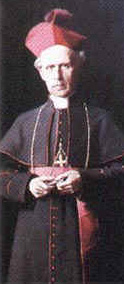
But it was written by this man:
bergoglio2
Get ready for more of the Hermeneutic of Continuity!

Posted in Uncategorized | 2 Comments

Papal Ecclesiology

My one time friend and neighbour, Pastor Matt Harrison (now President of the Lutheran Church Missouri Synod), has a quotation from the great German Lutheran theologian (and one time resident of North Adelaide) Herman Sasse on his blog entitled “Church and Churches.” The Pope of Rome himself still knows this… “. The quotation dates from 1950, so is pre-Vatican II, and definitely pre-Communio-Ecclesiology, but here is some of it for what it is worth:

The use of the plural demonstrates that there is such a thing as the individual ecclesia. The New Testament speaks of ecclesia [church] and ecclesiai [churches]. Every one of the ecclesiai is ecclesia in the full sense of the term. There is an identity of essence between the one ecclesia and each of the many ecclesiai. Linguistic usage and theological thought of later Christianity never forgot that there is no ecclesia without ecclesiae, and no ecclesiae without ecclesia. The Pope of Rome himself still knows this, much as he otherwise seems to have forgotten what the church is. “I acknowledge the Holy Catholic and Apostolic Roman Church, Mother and Governess of all churches” [Sanctam catholicam et apostolicam Romanam ecclesiam omnium ecclesiarum matrem et magistram agnosco]. Every Catholic who bears an office in the church must ever and again swear to this in the Tridentine Profession of Faith [Professio fidei Tridentina]. Consequently, even for Rome there is not only one ecclesia, but ecclesiae, whose Mother and Governess (whereby the austerity of the infallible Governess defines the love of the Mother so ready to advise) is the Holy Roman Church. Since, according to the Vaticanum the Pope possesses the universal episcopate, which means direct and immediate episcopal authority over the universal church, not much room is left for the ecclesiae next to the ecclesia (The dear mother gobbled up her daughters!). A little room always remains. For instance, this was shown when the invitation to the Vatican Council of 1869 was issued. And doubtless at the next council invitations will likewise be issued also “to all the Bishops of the Churches of the Eastern Rite, not in communion with the Apostolic See” [ad omnes episcopos ecclesiarum ritus Orientalis communionem cum Apostolica Sede non habentes]. It is a good Catholic proposition that the Roman Church is Mother and Governess of all Churches, even of the schismatic Churches of the East. And this even if today it has a meaning other than what it had at the time when St. John’s Lateran, the Cathedral of the Pope yet today, bore the title: “Head and Mother of all Churches of the Earth” [Caput et mater omnium orbis ecclesiarum]. That the church does not consist OF churches, but much rather shall we say, IN churches, is a proposition no longer compatible with the concept of the church, based upon the presuppositions of the modern post-Vatican Council. This truth finally depends upon the New Testament, and not Catholic canon law or dogmatics. It is born of the unconscious theology of faith, which every church has parallel to its officially formulated dogmatics. In this sense the Roman bishoprics, archbishoprics, the provincial churches, national churches and patriarchates are, according to Roman linguistic usage, churches. No matter how far afoot we may otherwise get from the New Testament, in this terminology at least, the New Testament view that the church exists in Churches, lives on.

It is very interesting, that comment about the Pope almost having forgotten the ancient ecclesiology of “the Church and the Churches”, because Vatican II (that “next council” to which Sasse refers although he could not have known it in 1950) spawned, in dialogue with the Eastern Churches, exactly the kind of New Testament ecclesiology Sasse was calling for, in the so-called “Communio” or “Eucharistic” ecclesiology which has born so much fruit in the last 50 years. (You can read more about this here, from none other than our beloved BXVI Emeritus.)

And I wonder if Pastor Harrison might not have been inspired by the terminology used by our instantly-beloved Pope Francis himself? For, in his first words to the record crowds gathered in St Peter’s Square to greet him upon his election, he managed to use the word “Pope” exactly ZERO (get that: NIL, 0, nothing) times, but referred to his office as “Bishop of the Church of Rome” no less than nine times (if you include all variants, including his reference to his predecessor and his Cardinal Vicar):

1) “You know that the duty of the Conclave was to give a bishop to Rome
2) “The diocesan community of Rome has a bishop.”
3) “I would like to say a prayer for our Bishop Emeritus Benedict XVI”
4) “And now let us begin this journey, [together] as bishop and people. ”
5) “This journey of the Church of Rome, which is to preside over all the Churches in charity.”
6) “I hope that this journey of the Church, which we begin today and in which my Cardinal Vicar who is present here will assist me, will be fruitful for the Evangelization of this beautiful city.”
7) “before the bishop blesses the people, I ask you to pray to the Lord that He bless me”
8) “the prayer of the people for a blessing upon their bishop
9) “Tomorrow I want to go and pray to Our Lady, asking her to watch over Rome.”

Take good note: When he refers to “The Church of Rome”, he is referring to the Diocese of Rome, the city of Rome, not the entire Universal Catholic Church. All of the reports in the media will tell you that the Church (aka, “the Catholic Church”) elected a “new Pope” last night, when in fact it was the Cardinal priests of Rome who elected a new bishop of the local Church of Rome. It is this “local church” of which he has been made “bishop”, and it is this “local Church” which “preside[s] over all the Churches in charity.” Thus, since the office of the Bishop of Rome (as we have already discussed on this ‘ere blog) is also the office of the Supreme Pontiff of the Holy Catholic Church, Francis also occupies the office of “Pope”. But fundamentally, he is the Bishop of Rome. This is a real lesson in Vatican II ecclesiology here, my dear reader.

And thus, I do not, myself, belong to “the Church of Rome”. I belong to “the Church of Melbourne”, and, by virtue of the fact that my church and bishop are in communion with the Bishop of Rome, I belong to the Universal Catholic Church. As Dr Sasse points out, “the church does not consist OF churches, but much rather shall we say, IN churches”. I am, as I am wont to say, “a Lutheran in communion with the Bishop of Rome”, and proud of it, however paradoxical that might sound (hey, if the Anglicans can do it…).

There was some question, prior to the election of Francis, as to whether the new Pontiff would continue the practice instituted by Pope Benedict XVI in having only a simple bishop’s mitre on his crest rather than the traditional papal tiara. I think we can assume that that question has been definitively answered in the positive already, even before the new crest is unveiled. (Although, for the sake of ecumenical clarity, I do hope he restores the title “Patriarch of the West”.)

Still, in all this reflection, I do wonder if it was simply coincidence that Pastor Harrison posted that post about Sasse about “the Church and the Churches”.

Posted in Uncategorized | 11 Comments

“Greetings, Earth…

20130314-080018.jpg

“…I come in peace!”

Thank you God for Pope Francis.

If you want an interesting profile on the new pope, try this – it’s from 2005.

Posted in Uncategorized | 41 Comments

“Daniel Mannix: His Legacy” – Conference this Saturday

I have been remiss in not advertising this sooner. Probably because I have been busy preparing my presentation for the event. As you can see, I am listed on the program at 2:30pm.

mannix

“Daniel Mannix: His Legacy” CONFERENCE, DINNER & BUS TOUR

The Daniel Mannix conference & celebrations will commemorate 100 years since Daniel Mannix arrived in Australia in 1913, and 50 years since his death in 1963. Daniel Mannix served as Archbishop of Melbourne for 46 years.

Conference details:
When: Saturday 16 March
Time: 9am for 9:30am start – 4:30pm
Where: State Library of Victoria, 328 Swanston St, Melbourne
Cost: $100 Student Concession: $70
Keynote speaker: Professor Dermot Keogh MRIA, Professor Emeritus of History , Ireland

Dinner details:
When: Saturday 16 March
Time: 6:30pm for 7pm – 9pm
Where: Mannix College, Wellington Road, Clayton
Cost: 3 course dinner $60

Bookings essential contact: Rachel Naughton rachel.naughton@cam.org.au or 9926 5677

Tickets: At Trybooking

*Please note: There will also be a BUS TOUR on Sunday 17 March

Bus Tour details:
When: Sunday 17 March
Time: From 8am – 5pm
Where: Starting with Mass at St Patrick’s Cathedral
Cost: $30

Tour Itinerary:
Raheen – We will drive past Raheen, Kew. Archbishop Mannix purchased Raheen in 1918 and it remained the official Archbishop’s residence until 1981.

Abbotsford Good Shepherd Sisters’ Convent Chapel – now restored. Tour conducted by restoration architect. Archbishop Mannix celebrated Mass in the chapel on Sundays.

Lunch – The tour group will have a choice of 4 cafes at the Convent from which to purchase lunch.

Newman College, University of Melbourne, Parkville – Archbishop Mannix commissioned Walter Burley Griffin to design Newman College. It was opened in 1918.

St Mary’s West Melbourne – Archbishop Mannix lived at the Presbytery at West Melbourne from his arrival in 1913 until the death of Archbishop Carr in 1917.

Bookings essential
contact: Rachel Naughton rachel.naughton@cam.org.au or 9926 5677

Posted in Uncategorized | 1 Comment

So much for the Vatican’s “Green Credentials”

Now THAT’s black smoke!

And 10/10 to Mons. Guido for style in the “Extra Omnes” ceremony!

Posted in Uncategorized | Leave a comment

New Email address

As you know, my yahoo email address was hacked and spammed a few days ago. Many of you received the unwelcome emails that resulted. I have taken the advice of a member of our commentary table and taken up a paid web-based email service (fastmail.fm – originally developed here in Melbourne although now overseas owned), using my own domain.
scecclesiaemail
I’m not closing my old yahoo address (a yahoo identity is still useful), but I have removed all the email contacts from that address, so you will never get spam email from my yahoo account again. Use this new address to communicate with me in the future.

Posted in Uncategorized | Leave a comment

If the Cardinals had a sense of humour…

…they might try, just for a gag, whomever they elect as pope, dressing +George up in the full papal regalia and pushing him out on the balcony after the “Habemus Papam” announcement, just to see the look on the faces of these guys.

Of course, no longer being a reader of The Age because of its declining reporting on exactly this kind of thing, I didn’t see the story there. I saw it in the other place, which has since pulled the article from the page on which it was located, and where today you will find a complete and unreserved apology for rerunning the story in its columns. The excuse used by that particular news-site which we hear so often is “we don’t write the stories, we just reprint them”, has been shown (in this deplorable instance) to be no excuse at all. By this stage they should have learned that not all that appears in our daily papers contributes to the “peace and for mutual upbuilding” (Rom 14:19) of the brethren.

I was going to blog about this deplorable article myself yesterday, but in fact if you wait long enough, someone else will do the job for you. Thank you, Zenit. I wonder how The Age’s religion reporter feels walking around Rome after that one…

Come to think of it, after watching St Geraldine of Doogue on Sunday night’s Compass “The New Pope – What Australians Want”, it might be an even better joke if the Cardinals just said, “What the heck. Let’s do it for real.”

Posted in Uncategorized | 58 Comments